
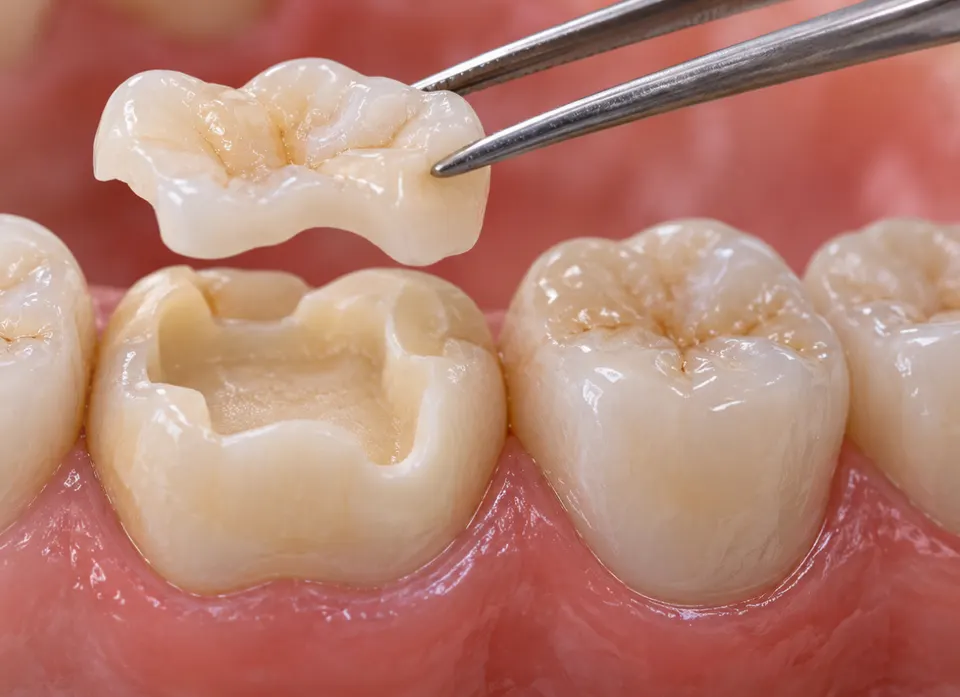
Inlays & Onlays in Waukegan
A precise repair. A stronger way forward.
Explore custom restorations for selected damaged teeth when a filling or full crown may not be the right fit.
- Custom fitMade to match your tooth for a natural, secure result.
- Targeted tooth repairRestores damage while preserving healthy structure.
- Options explained clearlyLearn about materials, coverage, and what's right for your needs.
What are inlays and onlays?
Inlays and onlays are custom restorations made to fit a prepared part of a tooth. They may be considered when damage needs more than a direct filling, while enough healthy structure remains for partial coverage.
Your dentist evaluates the damage, remaining tooth structure, and bite before recommending an option.

Two approaches to partial tooth restoration.
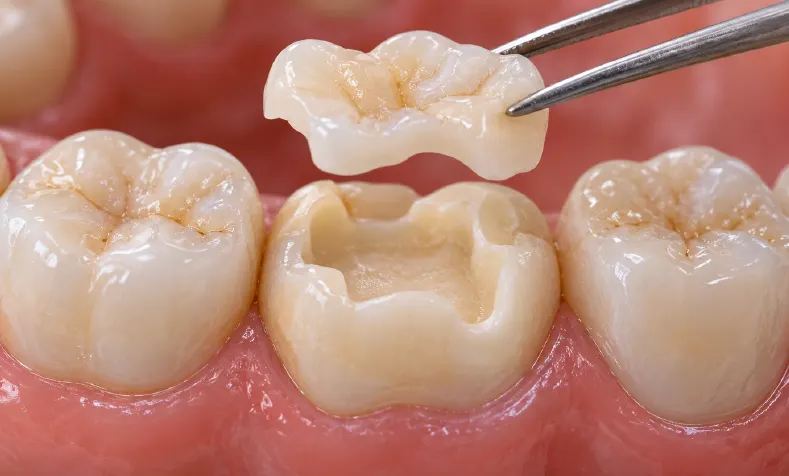
Inlays
Fit within the chewing surface, between the tooth's cusps.
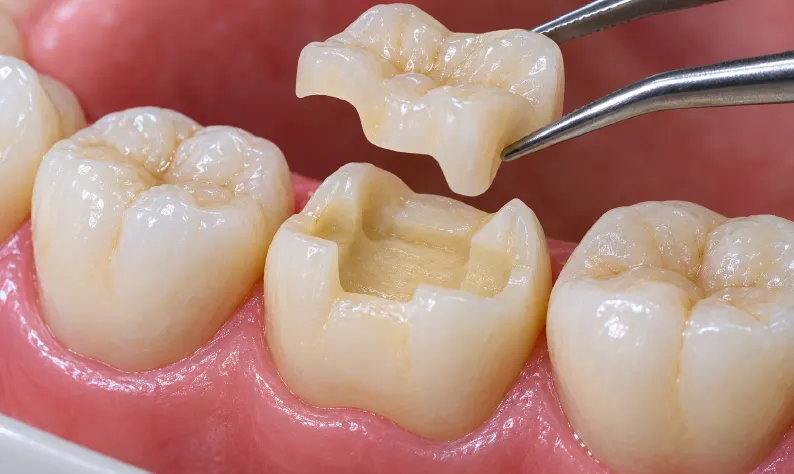
Onlays
Cover a larger area and include one or more tooth cusps.
The shape and coverage depend on the area that needs repair.
When might partial coverage be considered?
- A larger area of decayAssess whether the remaining tooth can support a custom partial restoration.
- A damaged old fillingReview the tooth after an existing restoration needs replacement.
- A weakened cuspEvaluate whether selected coverage can protect the damaged area.
- Preserving healthy structureDiscuss how much preparation each suitable option may require.
The right amount of coverage for your tooth.
We'll explain why a filling, inlay, onlay, or crown may be recommended and discuss materials, fit, bite, and maintenance.
- Understand the tooth's condition
- Compare suitable coverage options
- Review treatment steps and costs

Filling, inlay, onlay, or crown?
| Restoration | Typical coverage | What guides the choice |
|---|---|---|
| Filling | Selected damaged area restored directly | Size, location, and remaining structure. |
| Inlay | Within the cusps | Shape and extent of the prepared area. |
| Onlay | Chewing surface and selected cusps | Cusp strength and coverage needs. |
| Crown | Full coverage of the prepared tooth | More extensive protection needs. |
These are general distinctions. Your examination determines the recommended care.
Your restoration, step by step.
- Evaluate & planReview tooth health, bite, and suitable materials.
- Prepare & recordPrepare the damaged area and take fabrication records.
- Fit & placeCheck the restoration's fit, contacts, and bite.
- Review & maintainFollow care instructions and ongoing dental visits.
A temporary restoration may be used while the final piece is made. Timing varies.
Care for the restoration—and the tooth.
- Brush & clean between teethKeep the restoration edges and nearby gums clean.
- Protect your biteAvoid using teeth as tools and discuss grinding habits.
- Keep dental reviewsReport changes in sensitivity, comfort, or bite.
Restored teeth can still develop decay. Daily care and regular evaluations remain important.
Clear information before you decide.
We'll explain recommended care, materials, estimated costs, payment options, and insurance questions. Benefits vary by plan.

Inlay & onlay questions
- How are they different from a filling?
They are custom-made restorations fitted to a prepared area rather than placed as a direct filling.
- Are they always tooth-colored?
Material options vary. Your dentist will discuss suitable choices for your tooth and bite.
- Will I need a crown instead?
That depends on the damage, remaining structure, and protection the tooth needs.
- How long will the restoration last?
Longevity varies with tooth health, fit, bite, habits, and ongoing care.