

Dental Crowns & Bridges in Waukegan
Restore your bite. Rediscover your smile.
Explore options to protect a weakened tooth or replace selected missing teeth with a personalized restorative plan.
- Protect damaged teethHelp restore function and prevent further damage.
- Replace selected missing teethRestore your smile and help maintain your bite.
- Fit and bite reviewedWe check the fit, bite, and comfort so your restoration works for you.
Two restorations. Different roles.
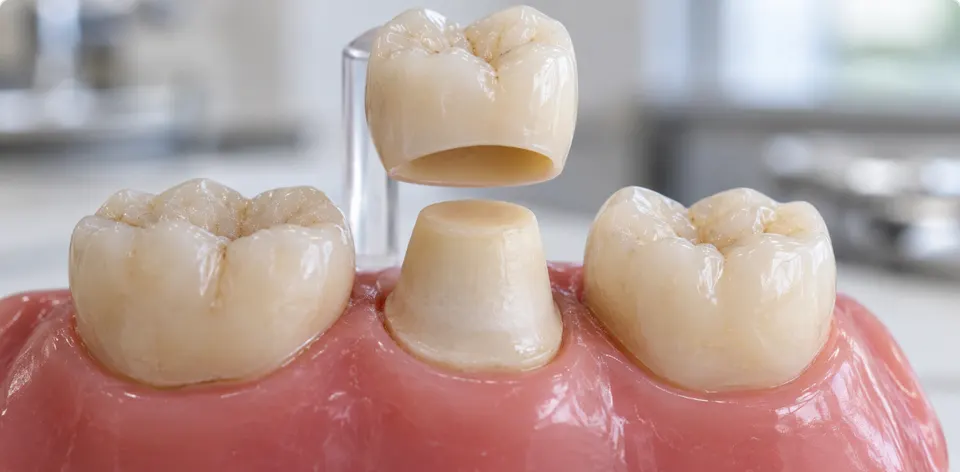
Dental Crowns
A custom crown covers the visible part of a prepared tooth to restore its shape and help protect remaining structure.
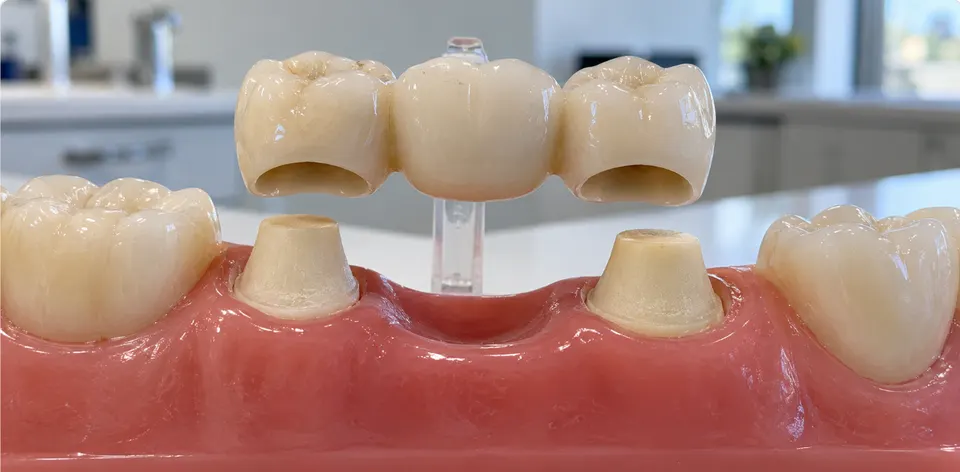
Dental Bridges
A bridge replaces one or more missing teeth using support from nearby teeth or implants, depending on the design.
Your dentist evaluates the teeth, gums, bite, and available support before recommending a restoration.
When might a crown or bridge help?
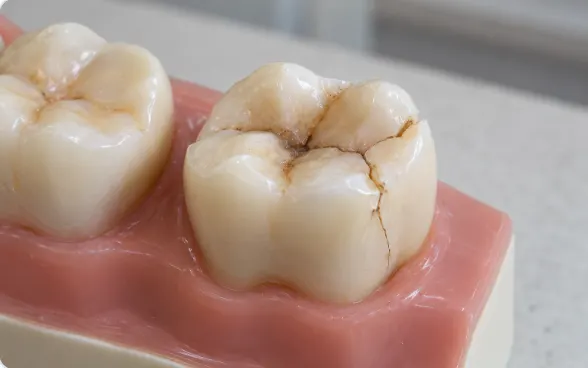
A weakened or broken tooth
Review whether a crown can provide suitable coverage.
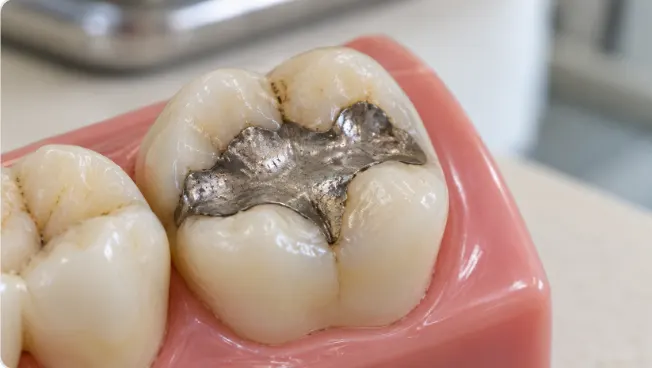
A large or failing filling
Evaluate remaining tooth structure and protection needs.
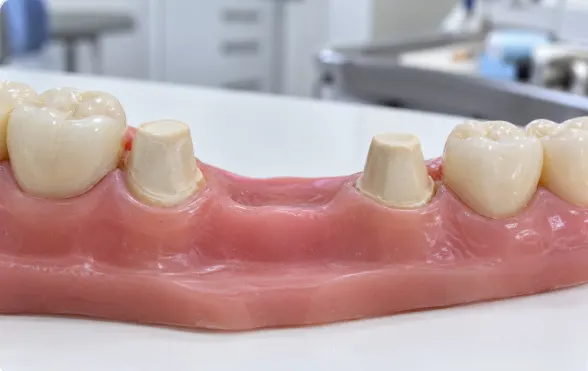
A missing tooth
Discuss whether a bridge is appropriate for the space and supporting teeth.

An older restoration concern
Check changes in fit, comfort, appearance, or bite.
Choose with a clear understanding.
Discuss materials, appearance, supporting teeth, maintenance, and alternatives before deciding.
- Review oral health and bite
- Compare suitable restoration designs
- Understand tooth preparation
- Discuss costs and ongoing care

Which approach fits your needs?
| Option | Main purpose | Key consideration |
|---|---|---|
| Crown | Cover and protect a weakened tooth. | Remaining tooth structure and bite. |
| Conventional bridge | Replace selected missing teeth. | Usually involves preparing supporting teeth. |
| Implant-supported option | Replace missing teeth with implant support. | Requires assessment of bone, health, and treatment suitability. |
| Removable denture | Replace missing teeth with a removable appliance. | Fit, support, comfort, and daily care. |
Not every option is suitable for every patient. Some care may involve specialist referral.
Your restoration, step by step.
- Evaluate & planExamine teeth, gums, bite, and suitable alternatives.
- Prepare & recordPrepare supporting teeth when needed and take fabrication records.
- Fit & placeCheck fit, appearance, contacts, and bite.
- Maintain & reviewFollow cleaning instructions and regular dental visits.
Temporary restorations may be used while the final work is made. Timing varies.
Keep your restoration—and its support—healthy.
- Clean around crownsBrush and clean between teeth, including restoration edges.
- Clean beneath bridgesAsk which tools help you clean under replacement teeth.
- Protect your biteDiscuss grinding and report changes in comfort or fit.
Crowns and bridges still need ongoing care. Natural supporting teeth can develop decay and gum problems.
Clear options. Clear estimated costs.
We'll review recommended care, materials, payment options, and insurance questions. Coverage and out-of-pocket costs vary by plan.

Crown & bridge questions
- Does a crown save every damaged tooth?
No. Suitability depends on tooth structure, infection, support, and other findings.
- Does a bridge come out for cleaning?
Conventional bridges are fixed in place. Your dentist will explain how to clean around and beneath them.
- Will it match my smile?
Tooth-colored materials may be suitable. Discuss shade, appearance, and alternatives.
- How long do crowns and bridges last?
Longevity varies with fit, supporting teeth, bite, habits, and maintenance.